# Environment Notes

The ability to add notes to each of your auto generated architecture diagrams is  provided, so you can add whatever additional information you like to your diagrams.

Notes are accessed in the side panel to the right of each diagram

<figure><img src="/files/gll0Z4t7NqbHL6nnE0bU" alt=""><figcaption></figcaption></figure>

When you select Notes from the accordion side panel menu the latest 10 environment notes are displayed from newest to oldest.

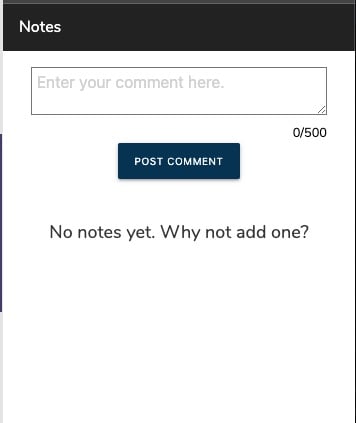
If no notes are present on this diagram you will see this:

<img src="https://www.hava.io/hs-fs/hubfs/No_Notes.jpg?width=356&#x26;height=423&#x26;name=No_Notes.jpg" alt="No_Notes" height="423" width="356">

You can now add a comment and hit the post comment button.
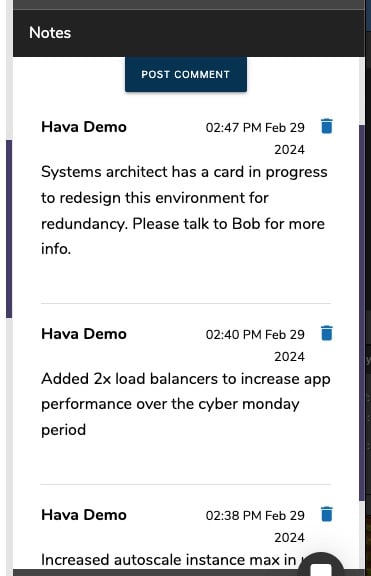
<img src="https://www.hava.io/hs-fs/hubfs/Multiple_Notes.jpg?width=371&#x26;height=576&#x26;name=Multiple_Notes.jpg" alt="Multiple_Notes" height="576" width="371">

To delete a note, click the garbage bin icon.

Once you have more than 10 notes against a diagram, you will get a See More option at the bottom of the notes list. Click that to load the next 10 environment notes.

### User Tagging / Mentions to Email

You can mention team members in notes by typing @ followed by their name. A drop down will appear for you to select the known team member.
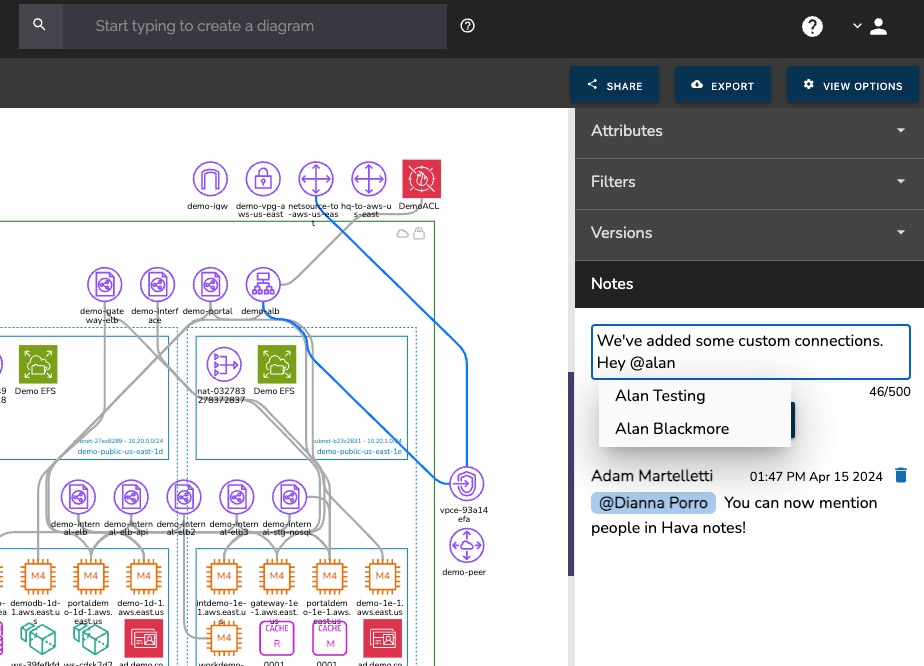
<figure><img src="/files/TDuftkWGgo8yyddGXAGL" alt=""><figcaption><p>Mentions in Notes</p></figcaption></figure>

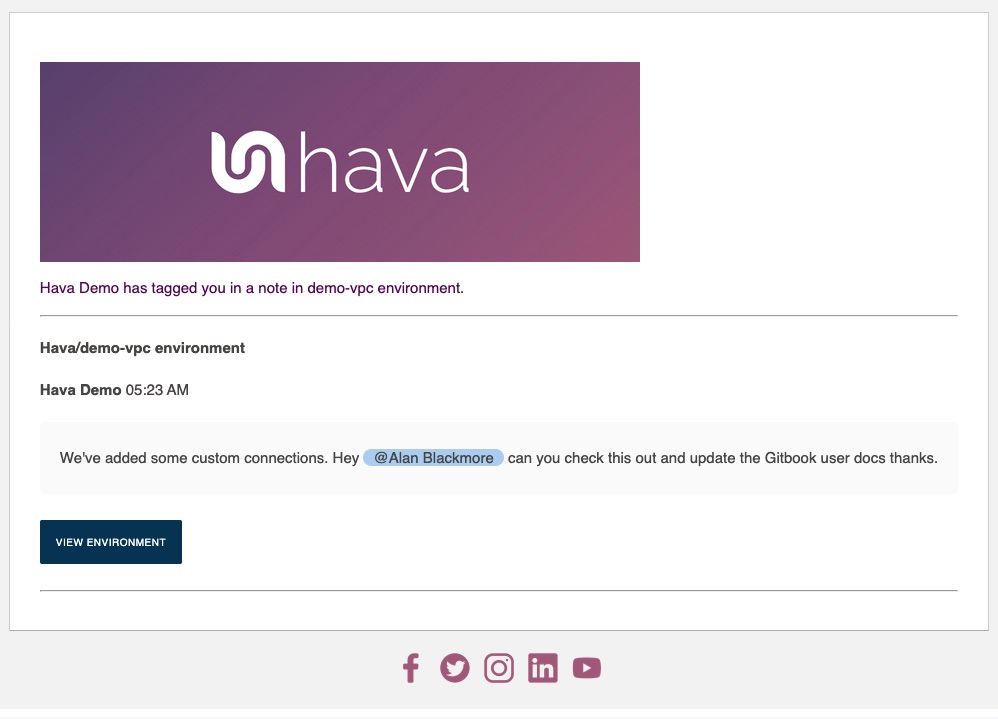
When you mention someone like this, they will receive an email notification that they have been tagged in the environment notes.

<br>

<figure><img src="/files/hc5C1SKuAJeJ6DxvxCnG" alt=""><figcaption><p>Email from Hava when a user is tagged in environment notes</p></figcaption></figure>


---

# Agent Instructions: Querying This Documentation

If you need additional information that is not directly available in this page, you can query the documentation dynamically by asking a question.

Perform an HTTP GET request on the current page URL with the `ask` query parameter:

```
GET https://docs.hava.io/document/environment-notes.md?ask=<question>
```

The question should be specific, self-contained, and written in natural language.
The response will contain a direct answer to the question and relevant excerpts and sources from the documentation.

Use this mechanism when the answer is not explicitly present in the current page, you need clarification or additional context, or you want to retrieve related documentation sections.